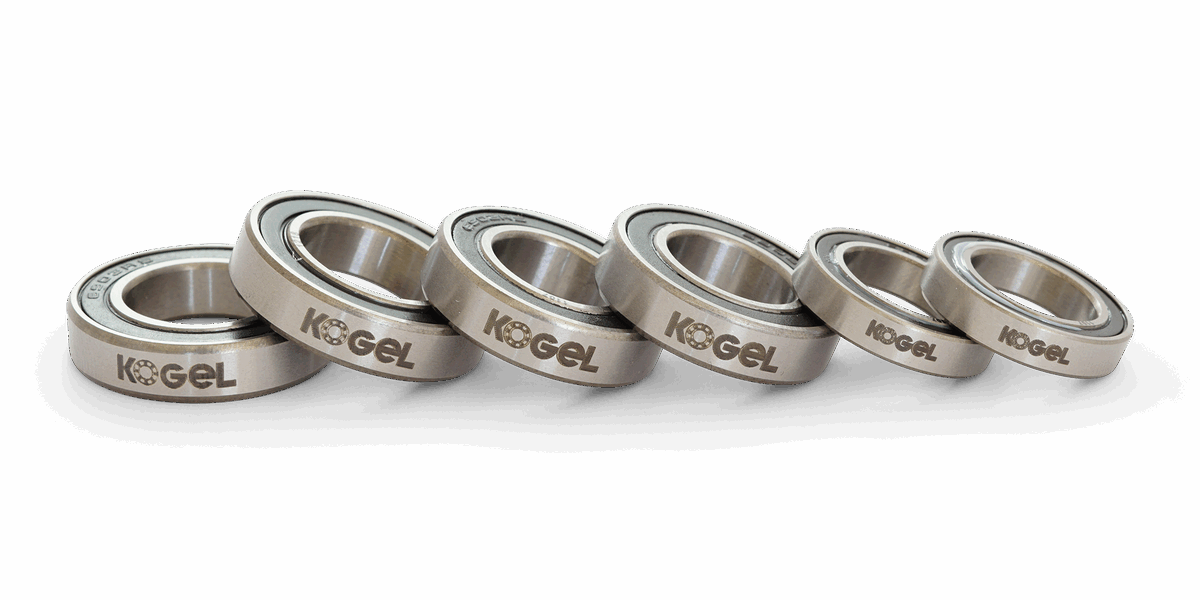
As someone who has run ceramic and steel bearings side by side across thousands of miles, I worked through the fundamentals of whether this upgrade makes sense. Today, I will share it all with you.
This article includes affiliate links. We may earn a commission at no extra cost to you.
The Ceramic Bearing Proposition: Marginal Gains or Marketing?
Ceramic bearings represent one of cycling’s most debated upgrades. Proponents cite laboratory-measured friction reductions; skeptics point to real-world conditions where those savings evaporate. At $300-800 for a full bottom bracket and wheel bearing upgrade, understanding what ceramic actually delivers—and under what conditions—determines whether this investment makes sense for your riding.

The Science of Friction Reduction
Ceramic bearing balls (silicon nitride, Si3N4) offer genuine physical advantages over steel:
- Hardness: Ceramic is 30% harder than bearing steel, reducing deformation under load
- Surface finish: Ceramic balls polish to smoother surfaces (5-10 micro-inch Ra versus 10-16 for steel)
- Weight: Ceramic balls are 40% lighter, reducing centrifugal loading at high RPM
- Corrosion resistance: Ceramic doesn’t rust, maintaining surface quality in wet conditions
In laboratory conditions with fresh bearings, clean grease, and controlled temperatures, ceramic bearings consistently measure 40-60% lower friction than equivalent steel bearings. This translates to 1.5-3 watts saved across a typical bottom bracket and wheelset bearing complement.
The 2-Watt Claim: Context Matters
The commonly cited “2 watts” savings requires specific conditions to achieve:
- Bearing break-in complete: 50-100 hours of riding for optimal performance
- Fresh lubricant: Friction increases 20-40% as grease degrades
- High speed: Benefits scale with RPM; more pronounced above 25 km/h
- Low contamination: Water and grit intrusion increases friction dramatically
Under real-world conditions—variable weather, road spray, infrequent service—ceramic bearings often perform at 60-80% of laboratory potential. The 2-watt savings becomes 1-1.5 watts in practice.
Bearing Types and Quality Tiers
Not all ceramic bearings deliver equal performance:
Full ceramic: Ceramic balls AND ceramic races. Maximum friction reduction, highest cost ($100+ per bearing), most fragile. Used in track and time trial applications.
Hybrid ceramic: Ceramic balls in steel races. Standard for cycling applications. The steel races handle impact loads better while ceramic balls provide friction benefits. $40-80 per bearing.
Grade classifications: G3 (highest precision), G5, G10, G25 (lowest). Most cycling applications use G5 ceramic balls. Full ceramic bearings from CeramicSpeed, Enduro, and Kogel typically specify G3-G5.
Where Watts Actually Hide
Ceramic bearing upgrades matter most in specific locations:
Bottom bracket: Highest load, highest impact. Quality ceramic BB saves 0.5-1 watt. However, bottom brackets endure significant contamination—water, road spray, sweat dripping from above. Frequent service is mandatory to maintain benefits.
Pulley wheels: Lower load, consistent high RPM. Ceramic pulleys save 0.3-0.8 watts. The jockey wheel market is flooded with options; quality varies enormously. Expect $80-200 for meaningful upgrades.
Wheel bearings: Medium load, variable conditions. Ceramic hub bearings save 0.5-1.5 watts across four bearings. Front wheel bearings benefit most (less contamination from chain lube and road spray).
Maintenance Requirements
Ceramic bearing benefits require maintenance discipline:
- Service interval: Every 2,000-3,000 miles in dry conditions; every 500-1,000 miles in wet conditions
- Lubricant: Low-viscosity oils or speed greases specifically formulated for ceramics
- Inspection: Check for lateral play and surface contamination monthly
- Replacement: Ceramic balls can chip under impact; replace at first sign of roughness
Compare this to quality steel bearings that tolerate 5,000+ miles between services with standard grease. The ceramic advantage requires ongoing commitment.
Cost-Per-Watt Analysis
Evaluate ceramic against other watt-saving investments:
- Ceramic bottom bracket + pulley upgrade: $300-500 for 1-2 watts = $150-500 per watt
- Aero helmet: $150-300 for 4-8 watts = $20-75 per watt
- Tire upgrade: $80-150 for 3-6 watts = $15-50 per watt
- Chain wax: $30-50 for 2-4 watts = $10-25 per watt
- Skinsuit: $200-400 for 5-10 watts = $20-80 per watt
Ceramic bearings deliver the lowest watt-per-dollar value among common performance upgrades. They make sense only after exhausting higher-value options.
Who Should Consider Ceramic
Appropriate candidates: Competitive time trialists and triathletes chasing marginal gains, track racers where every watt matters, riders who maintain equipment religiously, and those with budget available after optimizing higher-value categories.
Poor candidates: Recreational riders, those in wet/dirty conditions, riders who defer maintenance, and anyone seeking noticeable performance improvement (you won’t feel 2 watts).
The Honest Assessment
Ceramic bearings work. They do reduce friction. The watts saved are measurable in laboratory conditions and partially realized in practice. But the $500 upgrade that saves 2 watts is meaningful only in contexts where 2 watts matters—and only when maintained to specification.
For most cyclists, that $500 yields greater returns invested in coaching, tire selection, aerodynamic positioning, or training tools. Ceramic bearings are the final optimization step, not the first—marginal gains that only matter once the major gains are captured.

Stay in the loop
Get the latest pro bike tech updates delivered to your inbox.