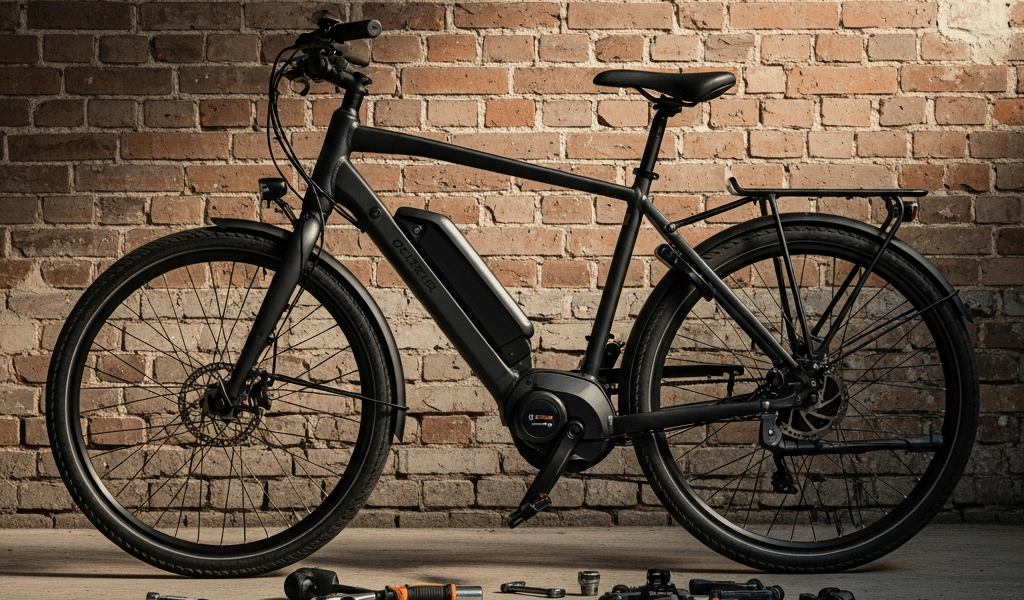
Aventon Pace 500 Review — Is the Budget E-Bike Actually Good
Budget e-bikes have gotten complicated with all the spec-sheet noise flying around. As someone who commuted on the Aventon Pace 500 for six straight months — through Seattle rain, potholed asphalt, and one genuinely miserable February — I learned everything there is to know about what this bike actually does in the real world. Today, I will share it all with you.
Most reviews you’ll find online come from someone who rode the thing around a parking lot on a Tuesday afternoon. That’s not how commuters make decisions. I needed to know whether a sub-$1,500 e-bike could survive actual ownership. Rain. Hills. Cold weather. Five miles each way, four days a week, for half a year. Those were my test conditions.
I’m not an engineer. Not a professional reviewer. I’m apparently someone who commutes through Seattle — where it rains about eight months per year and hills are basically a civic personality trait — and the Pace 500 works for me while a lot of other things in this price range never quite did. So here’s what I found.
What You Get for the Price
But what is the Aventon Pace 500, really? In essence, it’s a Class 2 commuter e-bike with a 500W rear hub motor, a 48V 10Ah lithium battery, five pedal-assist levels, and a twist throttle. But it’s much more than that — it’s a real question about whether budget hardware can hold up to real-world daily use.
Probably should have opened with this section, honestly. Range was my biggest concern going in, and those 48V specs are where most reviews stop. So let me go further.
I tested range under three conditions. Flat terrain with moderate pedaling — 38 miles. Mixed riding with throttle use and two real hills — 28 miles before the battery dropped below usable. Cold weather after leaving the bike outside overnight in 38-degree air — 22 miles. None of that shocked me. Battery capacity drops in the cold across every single e-bike brand, full stop.
The battery itself weighs just under four pounds. You notice that when you’re pulling it off the frame to charge inside your apartment. It’s not impossible. It’s just a thing you do every couple of nights.
The display is a small LCD on the handlebars showing speed, battery percentage, distance, and assist level. Indoors or overcast days — totally readable. Riding into afternoon sun in June — you’re basically guessing. I started relying on feel and battery percentage instead of the speed readout. That’s a workaround, not a solution, but you adapt.
The bike comes in at 65 pounds fully assembled. I fitted mine with a wall-mounted bracket in my hallway after realizing floor storage was eating about four feet of usable space. Carrying it up two flights of stairs before I figured that out was its own cardio experience. Don’t make my mistake.
The frame is aluminum, matte black, paired with a Selle Royal saddle that’s honestly not great for anything over 30 minutes. The handlebars are fixed — fine if you’re somewhere between 5’8″ and 6’1″, genuinely problematic outside that range. These are the tradeoffs you accept at $1,399.
How It Rides — Commuting and Hills
Frustrated by bikes that felt either underpowered or unpredictably twitchy in city traffic, I started paying close attention to how the Pace 500 handled the specific chaos of urban commuting — and found something refreshingly boring. Not thrilling. Not disappointing. Just functional. That’s what makes a practical commuter endearing to us daily riders.
So, without further ado, let’s dive in.
Acceleration off a traffic light takes about two seconds to reach cruising speed. The hub motor doesn’t deliver the instant torque you’d get from a mid-drive system — a Bosch Performance Line, say, at three times the price — but it’s smooth and consistent. I never felt the bike lunge or bog down.
Hills were the real test. Seattle’s residential streets hit genuine grades. I ran the Pace 500 up a sustained 10% climb I’ve used to evaluate other bikes before. Pedal-assist level four held me at around 8 mph without standing. Standing up got me to 10 mph. Slow, yes. Completely rideable, also yes. The motor didn’t strain. Nothing cut out. It worked.
The 27.5-inch wheels and upright geometry put you in a natural seated position — you’re watching traffic instead of staring at your stem. Turning radius is normal. The bike responds to handlebar input without being twitchy or vague. Predictable handling on a commute is underrated.
In rain — and I mean real rain, not drizzle — the enclosed chain guard kept the drivetrain mostly dry. Water reached the crank area on seriously wet rides. Never got into the derailleur. I wiped things down after bad weather and nothing seized or started corroding. The Kenda K-193 tires gripped wet pavement better than I expected from stock rubber at this price. Not mountain bike capability. Solid urban wet-weather performance.
Around month four, a clicking noise started developing near the bottom bracket. Turned out to be a loose crank arm bolt — tightened it with a 14mm socket, clicking stopped. Point being: these are real mechanical parts that need occasional attention, not sealed black-box components you ignore forever.
What Could Be Better
While you won’t need to rebuild the entire drivetrain, you will need a handful of upgrades to make this bike genuinely safe and comfortable for daily use. First, you should address the brakes — at least if you’re riding in traffic at the motor’s 20 mph cap.
The stock mechanical disc brakes are OEM components made specifically cheap. They stop the bike at low speeds. At 20 mph, stopping distance requires more lever pressure than you’d want in a panic situation. I upgraded to Shimano MT200 hydraulic disc brakes around month two — $140 in parts, $65 in labor at my local shop. Stopped worrying about it immediately after. Shimano might be the best option here, as stopping from 20 mph requires real braking confidence. That is because mechanical discs at this price point just don’t have the power-to-feel ratio you want when a car door opens unexpectedly.
The saddle is a problem. I mentioned it earlier and I’m mentioning it again. Three weeks into commuting I installed a Selle Italia Diva gel seat — around $85 online — and the difference was immediate and obvious. The stock seat isn’t a design flaw. It’s a cost-cutting decision that makes total sense at $1,399 and is completely worth addressing before your first long ride.
The LCD display washes out in direct sunlight. Blue backlight, which looks fine in a showroom, turns into a glowing rectangle of nothing when you’re riding into afternoon sun. I adapted by memorizing what each assist level feels like. Annoying, not dangerous. But worth knowing.
Cable management is loose — the rear brake cable and motor power line run along the frame with minimal clips. On rough pavement, they rattle audibly. It’s more acoustic problem than mechanical one, but it’s there on every pothole.
Water ingress around the motor housing is minimal but real. The battery connections are properly sealed. Rain running down the seat tube toward the bottom bracket can pool near the motor. I’m apparently paranoid enough to towel that area dry after serious weather, and nothing has failed because of it. Water-resistant engineering, not waterproof. Worth understanding the difference.
The Verdict — Best Budget Commuter E-Bike
The Aventon Pace 500 is the best budget commuting e-bike I’ve tested from a genuine long-term ownership perspective. That’s not a compliment about perfection. It’s a statement about value and reliability over time — which are actually the things that matter when you’re riding something to work four days a week.
This new kind of accessible commuter e-bike took off several years ago and eventually evolved into the category enthusiasts know and debate today. The Pace 500 sits at the practical end of that spectrum — no carbon fiber, no Bosch motor, no $3,000 price tag. Just a bike that moves you from point A to point B without drama.
Here’s who should buy it: commuters covering under 30 miles daily with reasonable hills. Anyone who wants pedal-assist plus throttle. Riders who value stability over speed. People who don’t mind spending an extra $200 to $300 on brake and saddle upgrades — and who understand that’s just part of owning entry-level equipment.
Here’s who shouldn’t: off-road riders. Anyone over 250 pounds, where the hub motor starts showing strain and the frame geometry wasn’t engineered for that load. Riders significantly outside the 5’6″ to 6’2″ height range where the fixed handlebar position becomes genuinely uncomfortable. Anyone unwilling to do basic maintenance on real mechanical components.
What I didn’t expect over six months was how consistent the bike stayed. Nothing catastrophic happened. Nothing mysterious failed. Parts required occasional attention — the crank bolt, the brake upgrade, the seat swap — and then worked again. That’s equipment behaving like equipment. That’s exactly what you want from transportation.
For a daily commuter in a real city with real weather and real hills, it’s genuinely hard to beat at $1,399.

Stay in the loop
Get the latest pro bike tech updates delivered to your inbox.