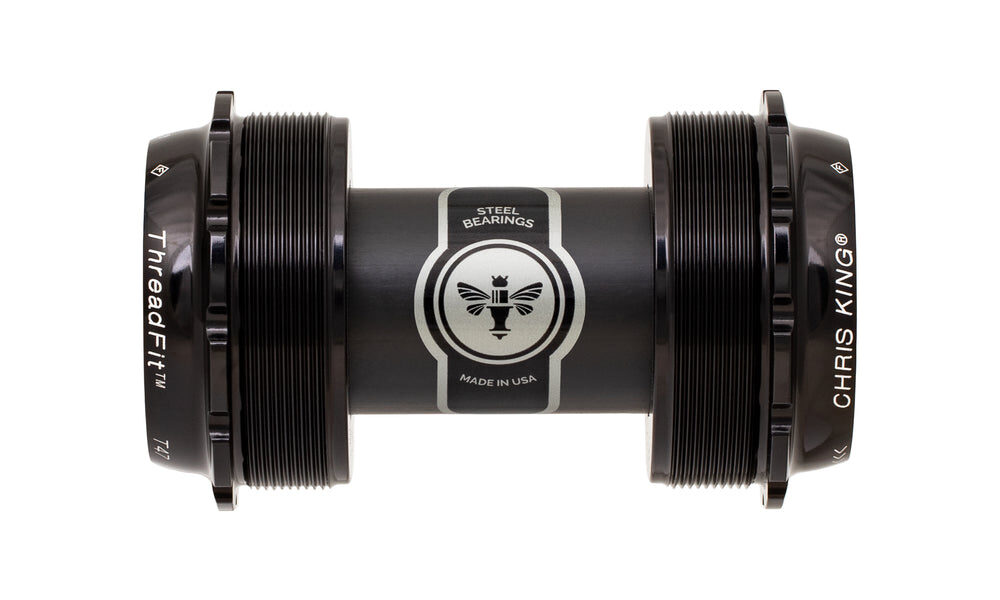
As someone who has dealt with creaking bottom brackets more times than I care to remember, I learned everything there is to know about the alphabet soup of BB standards. Today, I will share it all with you.
Bottom Bracket Standards: Understanding the Alphabet Soup
Few topics generate more mechanic frustration than bottom bracket standards. Threaded, press-fit, T47—the proliferation of interfaces reflects bicycle frame manufacturing evolution, not performance improvement. Understanding what each standard offers (and what problems it creates) helps you navigate compatibility challenges and make informed frame purchasing decisions.
BSA/English Threaded: The Original Standard
Specification: 68mm wide shell, 1.370″ x 24 TPI threads (both sides), left side reverse threaded
Advantages: Threads provide adjustment tolerance—slight shell manufacturing variations don’t affect bearing alignment. Removal and installation require only standard tools. No creaking from BB shell fit issues. Established since the 1900s with massive parts availability.
Disadvantages: Requires frame manufacturers to cut precision threads. Shell diameter limits bearing size to 24mm (Shimano/SRAM road) or 30mm (with external cups).
Best for: Riders who prioritize serviceability, those who maintain their own equipment, and frames where stiffness-to-weight isn’t the primary concern.
Italian Threaded
Specification: 70mm wide shell, 36mm x 24 TPI threads, both sides right-hand threaded
Advantages: Larger diameter than BSA, allowing bigger bearings. Traditional standard for Italian framebuilders.
Disadvantages: Right-hand threading on both sides can loosen under load. Less common outside European steel and titanium frames. Limited parts availability compared to BSA.
Best for: Italian frames (Colnago, Pinarello heritage models, De Rosa), titanium custom builds from Italian-influenced builders.
Press-Fit Standards: BB86, BB90, PF30, BB30
Press-fit bottom brackets install via interference fit—bearings are pressed directly into the frame shell without threads.
BB86/BB92:
- Shell: 41mm inner diameter, 86.5mm wide (road) or 92mm (mountain)
- Accepts: Shimano/SRAM 24mm spindles via pressed bearings
- Advantages: Wider shell for greater lateral stiffness
- Disadvantages: Tolerance issues cause creaking; difficult removal
BB30:
- Shell: 42mm inner diameter, 68mm wide
- Accepts: 30mm spindle cranks directly (no adapter needed)
- Advantages: Larger bearings, lighter than external solutions
- Disadvantages: Notorious for creaking, tolerance-sensitive, limited 30mm crank availability
PF30:
- Shell: 46mm inner diameter, 68mm wide
- Accepts: 30mm spindle via pressed cups (not direct-press bearings)
- Advantages: Easier to service than BB30; cups can be replaced
- Disadvantages: Still susceptible to creak from cup movement
The Press-Fit Problem
Press-fit standards emerged from frame manufacturing convenience—large, smooth bores are easier to produce than precision threads. The burden shifted to bottom bracket manufacturers and consumers.
The creaking issue stems from tolerance stacking: frame shell tolerances of +/- 0.1mm combine with bearing cup tolerances of +/- 0.05mm. In worst cases, the bearing cup fits loosely, micro-moves under load, and creates noise. Solutions (thread-locking compound, carbon paste, replacement with tighter-tolerance cups) address symptoms rather than causes.
T47: The Modern Resolution
Specification: 47mm inner diameter shell, M47 x 1mm thread pitch, 68mm or 86mm width options
T47 combines press-fit’s large bearing capacity with threaded interface reliability. The 47mm threaded shell accepts 30mm spindle cranks directly and provides tolerance absorption through threaded engagement.
Advantages:
- Large bearings (30mm spindle compatible) with threaded interface
- No creak issues from shell fit
- Easy service with standard tools
- Wide enough for road, gravel, and mountain applications
Disadvantages:
- Requires frame manufacturers to thread large-diameter shells
- Parts availability still building (though growing rapidly)
- Retrofit impossible—T47 requires purpose-built frames
T47 has gained significant adoption since 2018, with major manufacturers (Allied, Mosaic, Specialized on some models) and nearly all custom builders offering or standardizing on T47.
Adapter Strategies
For frames with problematic press-fit shells, threaded adapter cups can restore reliability:
- BB86 to BSA: Wheels Manufacturing, Chris King, and Hambini offer threaded inserts
- PF30 to BSA: Similar adapter options with 30mm shell accommodation
- BB30 to BSA: Most complex adaptation; quality varies significantly
Adapter cups add $50-150 to bottom bracket cost but permanently solve creak issues. The trade-off: slightly reduced shell stiffness and increased stack height in some designs.
Choosing Your Next Frame
Priority 1 (if available): T47 threaded—modern standard combining best attributes
Priority 2: BSA/English threaded—proven, serviceable, compatible
Acceptable: BB86/BB92 with quality cups (Wheels Manufacturing, Kogel, Chris King)
Avoid if possible: BB30 and PF30 on new purchases—the creak risk isn’t worth the marginal stiffness benefit
Bottom bracket standards shouldn’t drive frame purchasing decisions—but they should inform them. A superior frame design with PF30 remains better than an inferior frame with T47. Understand the maintenance implications and factor them into your total cost of ownership.

Stay in the loop
Get the latest pro bike tech updates delivered to your inbox.