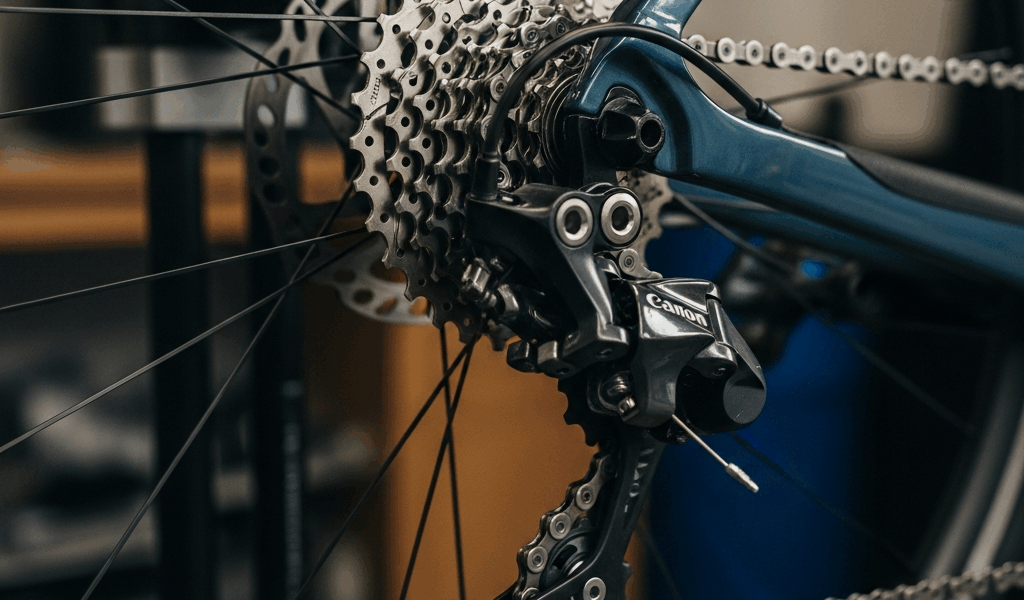
You are scrolling through road bike listings and every one throws a different number at you — 11-speed, 12-speed, 2×11, 1×12. The natural assumption is that more gears means a better bike. It does not. The number on the spec sheet matters far less than the range those gears actually cover, and understanding that one distinction will keep you from overpaying for a drivetrain you never fully use.
More Gears Is Not Always Better
Modern road bikes ship in a handful of configurations: 1×11, 1×12, 2×11, 2×12, and on older or budget bikes, 3×8 or 3×9. That “speed” number — 11-speed, 12-speed — just counts the cogs on the rear cassette. Multiply by the chainrings up front and you get the total gear count. Simple math, misleading conclusion.
Here is why: an 11-speed bike with a wide-range cassette (11-34 teeth) covers essentially the same real-world range as a 9-speed with a compact double crankset. The extra cogs do not give you easier climbing or faster sprinting — they fill in the gaps between gears with smaller steps. Useful if you are holding a steady cadence in a peloton. Barely noticeable on a Saturday morning coffee ride.
New cyclists tend to treat the speed count like a quality badge — higher must be better. Riders with a few thousand miles under them look at the cassette range and chainring sizes instead. Those numbers tell you what the bike can actually handle. I have seen a 22-speed bike with a narrow cassette leave its rider walking up a climb that a 16-speed bike with the right gearing rolled over without drama.
1x vs 2x vs 3x: Which Drivetrain Fits Your Riding
Forget the rear cassette for a moment. The chainring setup — how many gears you have up front — is where the real decision lives, and matching it to how you actually ride matters more than any spec sheet comparison.
1x (single chainring) is the clean, simple option. One ring up front, one shift lever, no front derailleur to rattle loose or require adjustment. The bike looks sharper, maintenance drops noticeably, and you will never accidentally cross-chain. It works well for gravel riding, flat to moderate terrain, or anyone who values mechanical simplicity over having the perfect gear for every gradient. The trade-off is wider spacing between gears — on a steady climb, you might find yourself stuck between a gear that is almost right and one that is slightly too hard. For racing or highly variable terrain, that in-between feeling becomes a real issue.
2x (double chainring) remains the road cycling standard, and there are good reasons it has held that position for decades. A compact double (50/34 chainrings) or mid-compact (52/36) paired with an 11 or 12-speed cassette delivers closely spaced gears across a wide range. Small ring for climbing, big ring for flats and descents. The gear overlap between chainrings means you nearly always find the exact ratio you want for whatever gradient the road throws at you. Most road cyclists from weekend club riders to serious amateurs land on 2x and never feel limited. If someone asked me what to recommend with zero information about the rider, 2x is the answer every time.
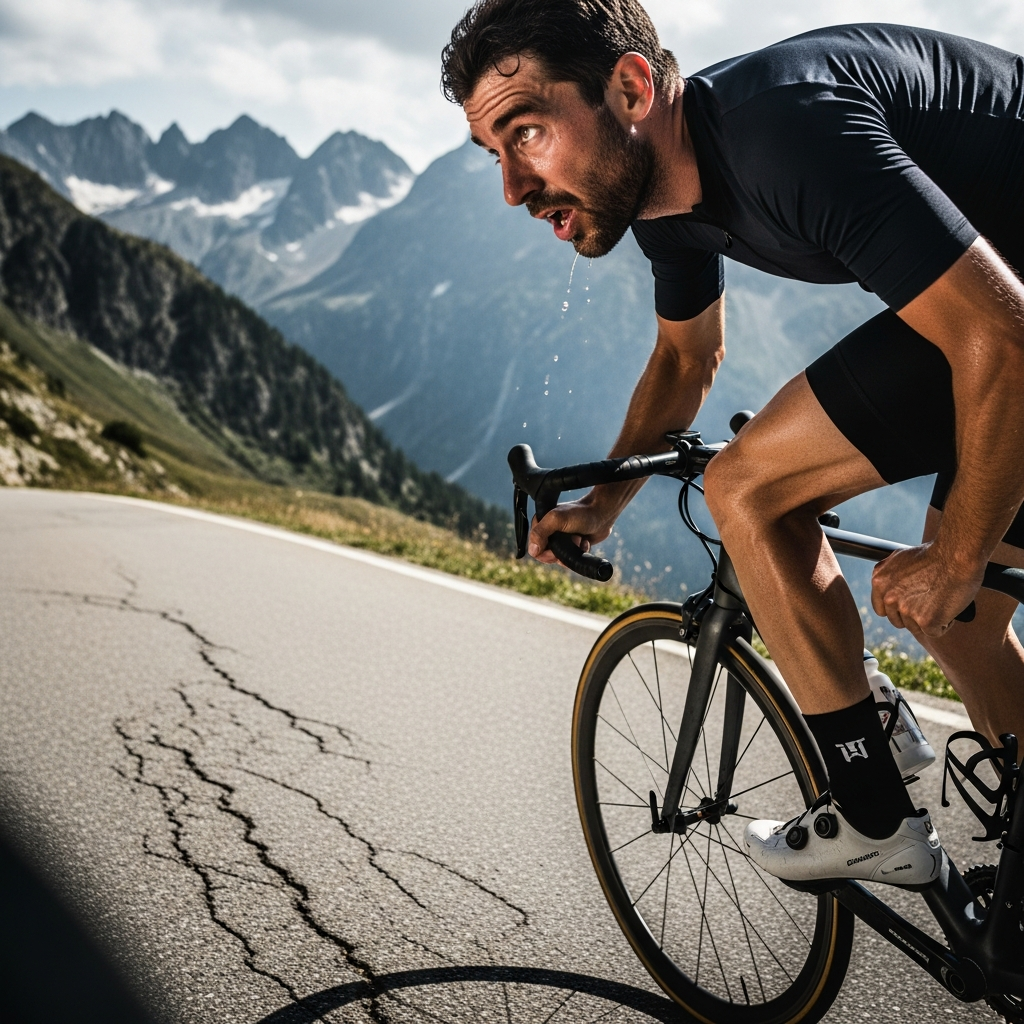
3x (triple chainring) gives you the widest total range and the easiest possible climbing gear. That granny ring lets you crawl up grades that would stop a double-equipped bike cold, which is exactly why touring bikes still use triples. You can load 40 pounds of camping gear onto panniers and still pedal up a mountain pass. The downside is mechanical complexity — a third shifter, a front derailleur with more adjustment fuss, and a heavier crankset overall. Modern 2x drivetrains with wide-range cassettes have made triples unnecessary for most road riding, but for loaded touring or extremely hilly terrain with a heavy setup, they still earn their place.
Cassette Range Matters More Than Speed Count
This is the part that most gear-count discussions skip entirely, and it might be the most useful thing you read about road bike drivetrains.
Your cassette range — the tooth counts on the smallest and largest rear cog — determines your actual climbing and descending limits. An 11-25 cassette has a tight range with small steps between gears, ideal for flat to rolling terrain where precise cadence control matters. An 11-32 cassette covers much more ground, delivering a meaningfully easier climbing gear at the cost of slightly bigger jumps between shifts.
Put real numbers on it. On a 10% grade with a compact 34-tooth chainring up front, an 11-32 rear cassette keeps you pedaling at a manageable 75 RPM. Swap in an 11-25 and the same gradient forces your cadence down to around 60 RPM — which is fine if you have strong legs and good fitness, but punishing if you are newer to climbing or already five hours into a ride. The cassette range is literally the difference between riding a climb and grinding to a stop on it.
If you are new to road cycling and have no idea what terrain you will be riding regularly, start here: a compact double crankset (50/34 chainrings) paired with an 11-32 rear cassette. That combination handles fast group rides on flat roads, rolling hills, and legitimate mountain passes without ever leaving you stuck. Once you know your legs and your local routes, you can swap to a tighter cassette. But starting wide gives you room to grow into the bike rather than hitting a wall on your first real climb.
When to Care About Gear Count and When Not To
Gear count matters in exactly one scenario, and it is narrower than the bike industry would like you to believe.
Racing. Specifically, riding in a peloton where micro-adjustments in cadence let you match pace surges without burning extra energy. The difference between a 15-tooth and a 16-tooth cog can mean sitting comfortably at 92 RPM or grinding at 88 RPM for an hour-long time trial. At sustained race output, those 4 RPM compound into real fatigue. This is why pro road racing has pushed to 12-speed — that extra cog fills gaps that matter when you are riding at threshold for hours.
For everyone else? Ten, eleven, or twelve speeds all work perfectly well for recreational road cycling. The jump to 12-speed Shimano — Ultegra R8200 and Dura-Ace R9200 — adds one cog to the cassette. Noticeable improvement? Barely. Worth upgrading for? Almost never, unless you are already replacing a worn-out groupset and the price difference is trivial.
And if you are shopping used bikes, do not let a “9-speed” or “10-speed” sticker scare you away from an otherwise solid machine. A well-maintained 10-speed Shimano 105 with the right cassette handles recreational riding, training, and even amateur racing without apology. Past 10 speeds, the returns on each additional cog diminish sharply for most riders.
The smartest upgrade if your current gearing feels wrong is also the cheapest one. Swap the cassette. A new cassette runs $30 to $60, takes about 15 minutes with a chain whip and lockring tool, and going from an 11-25 to an 11-32 transforms your climbing range without touching anything else on the bike. That single swap does more for most riders than any gear-count upgrade on the market.




Stay in the loop
Get the latest pro bike tech updates delivered to your inbox.