You just picked up a new road bike and the valve on the inner tube looks completely different from the one on your old mountain bike. Or maybe you are at a gas station with a soft tire, jabbing the air hose at the valve and getting nowhere. Welcome to the Presta-Schrader divide. It trips up every cyclist at some point, and it is much simpler than it seems once someone explains it properly.
The Key Difference in 30 Seconds
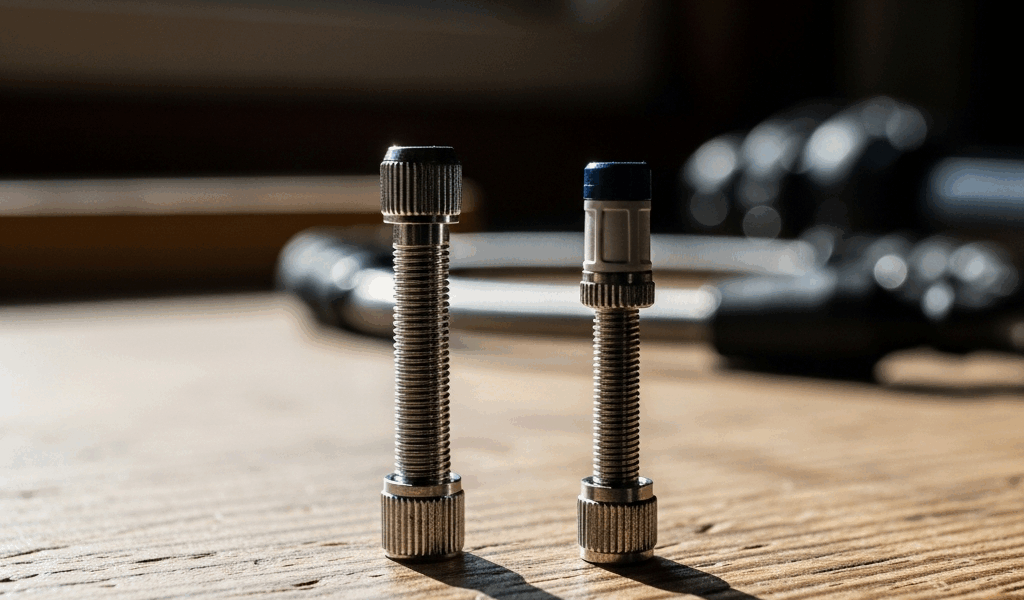
Presta valves are the skinny ones. Narrower than a pencil, with a small locknut on top you unscrew before pumping. They show up on road bikes, gravel bikes, and most higher-end mountain bikes. You need a Presta-compatible pump head or a cheap adapter to inflate them.
Schrader valves are the chunky ones — identical to what is on your car. Wider stem, spring-loaded pin inside, and they work with any gas station air hose or standard automotive pump. Most hybrid bikes, kids’ bikes, and entry-level mountain bikes run Schrader valves.
If you are mid-flat-tire and just need to know which pump head to grab, that is your answer. The rest of this covers the engineering reason behind the split and how to deal with the compatibility headache in a household with multiple bikes.
Why Different Bikes Use Different Valves
There is an actual engineering reason behind this, not just bike industry chaos.
Road bikes run Presta because the narrow valve stem requires a smaller drill hole in the rim. When your road rim is holding 100 to 130 PSI, every bit of material around the valve hole contributes to rim strength. A Schrader-sized hole removes more metal from a lightweight rim, and at those pressures, structural integrity is not a suggestion — it is mandatory. The narrower profile also saves a small amount of rotational weight. Trivial per valve, sure, but road cycling is the sport where people weigh their bar tape and agonize over titanium bolts.
Mountain bikes went with Schrader for decades because the logic reversed. Lower tire pressures (25 to 45 PSI), wider rims with plenty of material to spare, and a massive practical advantage — you can inflate a Schrader valve at literally any gas station. When you are deep into a trail system with a slow leak, that universal compatibility is more than theoretical. Modern high-end mountain bikes have trended toward Presta valves, mostly for weight savings and because tubeless valve stems are available in both types now.
The result in most cycling households: a road bike with Presta and a mountain or hybrid with Schrader sitting three feet apart in the same garage. Two valve types, one annoyed cyclist reaching for the pump.
Pump Compatibility: What Works With What
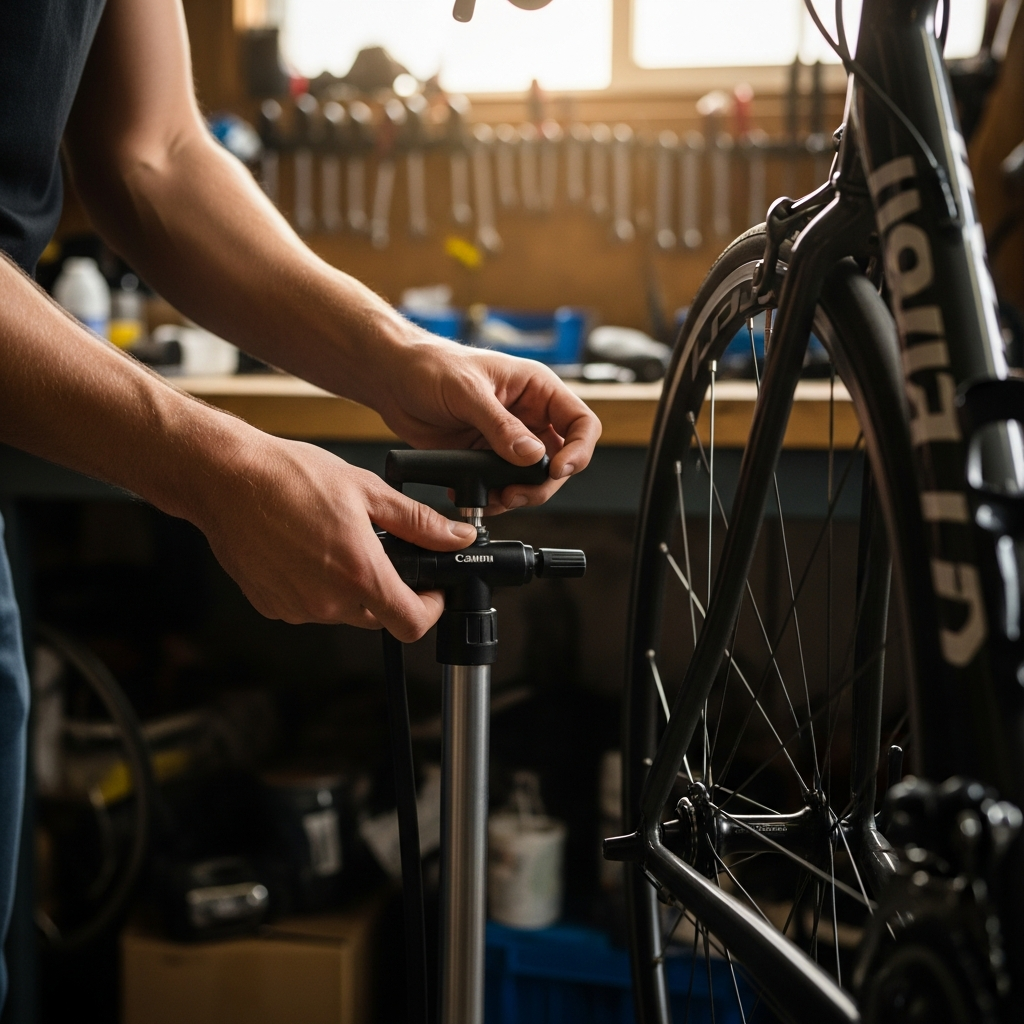
This is the section that matters when you are in the garage with a soft tire and a pump that refuses to cooperate.
Good news first: most quality floor pumps built in the last decade handle both valve types. Check your pump head for two openings or a reversible internal chuck. The Lezyne Sport, Topeak JoeBlow, and Park Tool PFP-8 I have personally used all accommodate Presta and Schrader without any fiddling or adapters. If you are shopping for a floor pump and it only does one valve type, that is a reason to keep looking.
Older pumps or budget models with Presta-only heads just need a simple brass adapter — a little threaded cylinder that screws onto a Presta valve and effectively converts it to Schrader dimensions. They run $2 to $5, weigh almost nothing, and fit in the smallest saddle bag pocket. I keep one on my keychain. It gets a laugh from riding buddies until someone actually needs it, which happens about twice a year.
Gas station air compressors are Schrader only, full stop. If your bike has Presta valves and you get a flat on the road, carrying a Presta-to-Schrader adapter is the difference between airing up and calling for a ride home. I learned this the hard way on a solo ride about 40 miles from home — my CO2 cartridge misfired, and a gas station was my only option. Without that adapter, I would have been making a very long phone call.
Portable CO2 inflators come in both valve-specific and universal versions. Match your bike or buy universal. Most Lezyne and Genuine Innovations inflator heads handle both valve types out of the box.
The Practical Verdict: Which Is Better?
Neither valve is objectively superior — they each solve a specific engineering problem well.
Presta holds pressure more reliably at high PSI. The locknut mechanism seals better than a spring-loaded pin when you are running 100+ PSI on road tires. If you have noticed your road tires losing 10 to 15 PSI between rides, a worn Presta valve core is a $3 replacement that fixes it. At high pressures, Presta just seals tighter.
Schrader wins overwhelmingly on universal compatibility. Gas stations, auto parts stores, your neighbor with a tire compressor in the garage — anything that inflates a car tire inflates a Schrader valve. For bike commuters who want the confidence that any random air source works in a pinch, that accessibility has real value.
My actual recommendation after years of dealing with both: if you ride road, Presta is what comes on your wheels and changing it would mean new rims — so embrace it. Get a quality dual-head floor pump and throw an adapter in your saddle bag. If you ride mountain or hybrid with Schrader valves, enjoy the convenience and spend zero energy worrying about it. And if your garage has bikes with both valve types — which describes most cycling households I know — a dual-head floor pump in the $40 to $60 range is the one purchase that makes the entire compatibility question disappear. Buy it once, never think about valve types again.


Stay in the loop
Get the latest pro bike tech updates delivered to your inbox.