As someone who has worked through countless pre-race evenings dialing in my equipment, I learned everything there is to know about the professional mechanic’s approach to race prep. Today, I will share it all with you.
Race Day Prep: The Pro Mechanic’s Evening Checklist
The night before a race, professional team mechanics execute a systematic preparation protocol that leaves nothing to chance. Every cable tension, every tire inspection, every bolt torque is verified. This checklist—derived from practices across pro tour teams—ensures your equipment is race-ready when you roll to the start line.
Drivetrain Inspection (30-45 minutes)
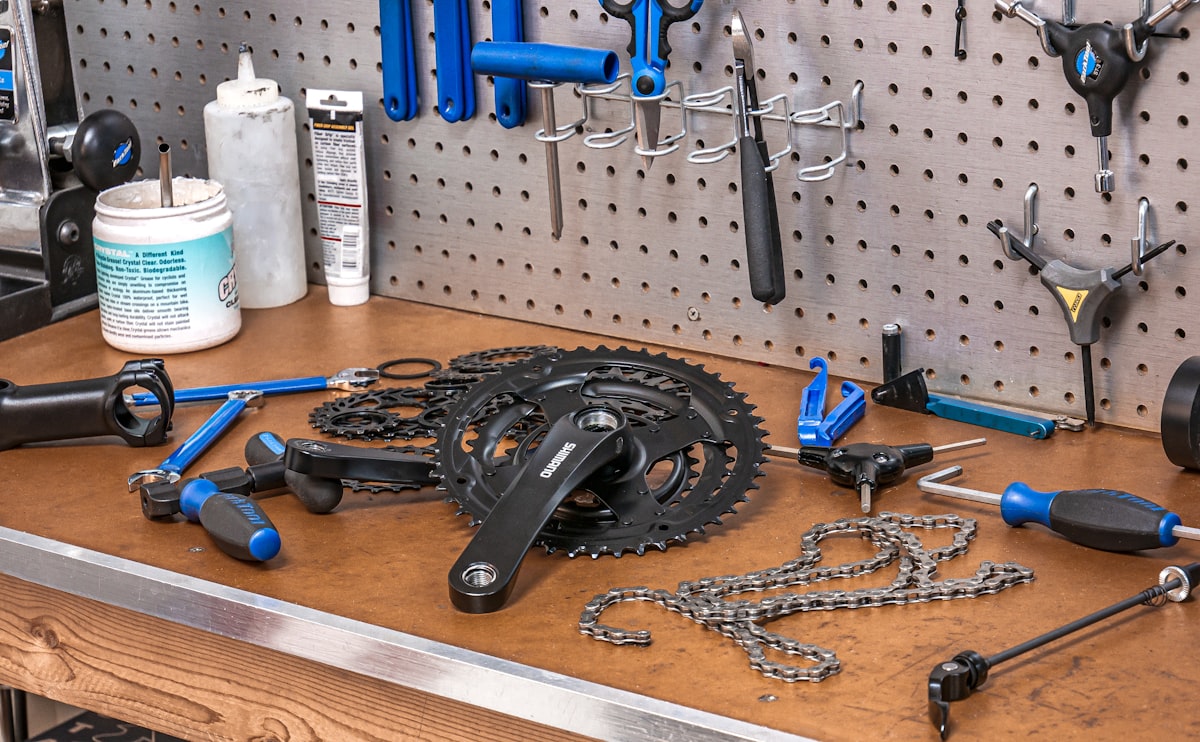
Chain condition check:
- Measure chain wear with chain checker tool—replace if beyond 0.5% elongation
- Clean chain thoroughly if running wax (remove all debris)
- Apply fresh lubricant if running wet lube—wipe excess completely
- For races, fresh wax application the evening before allows proper curing
Cassette and chainring inspection:
- Check for shark-finning on most-used cogs (replace if visible wear patterns)
- Verify chainring bolt torque (typically 6-8 Nm)
- Confirm cassette lockring tight (40 Nm)
- Check for bent chainring teeth—roll cranks and observe chain path
Derailleur adjustment:
- Verify limit screws set correctly (test both extremes under load)
- Check B-tension screw adjustment (4-6mm gap between upper pulley and largest cog)
- Confirm cable tension produces instant shifts across all gears
- For electronic: verify battery levels exceed 50%, charge overnight if needed
- Clean pulley wheels—remove hair, fiber, and accumulated debris
Wheel and Tire Preparation (20-30 minutes)
Tire inspection:
- Check tread surface for cuts, embedded glass, or wear indicators
- Inspect sidewalls for cracks or damage
- Verify tire seats evenly in rim bead hook—spin wheel and observe
- For tubeless: check sealant level, add 30ml if more than 3 months since last service
Pressure setting:
- Set target pressure based on rider weight, course conditions, and weather forecast
- Account for overnight temperature changes—tire pressure drops ~2% per 10 degrees F cooling
- Inflate 2-3 PSI above target, verify in morning
Wheel inspection:
- Spin each wheel, checking for lateral and radial true
- Verify spoke tension by squeezing parallel pairs—tension should feel even
- Check quick release or thru-axle security
- Confirm rotor alignment (disc brake)—no rubbing through rotation
Brake System Check (15 minutes)
For rim brakes:
- Check pad alignment—pads should contact rim evenly, not touch tire
- Verify pad wear—replace if wear indicators are reached
- Confirm cable tension—lever should not pull to bar
- Clean braking surfaces—rim and pads—with isopropyl alcohol
For disc brakes:
- Check pad thickness—replace if less than 1mm material remains
- Verify rotor condition—no warping, scoring, or contamination
- Confirm lever feel—should be firm with consistent engagement point
- Bleed if lever feels spongy—but allow 12+ hours for brake-in after bleeding
- Clean rotors with isopropyl alcohol, avoiding pad contact with bare fingers
Contact Points (15 minutes)
Handlebars and stem:
- Verify stem bolts properly torqued (typically 4-6 Nm for face plate, 5-6 Nm for steerer clamp)
- Check handlebar clamp security—should not rotate under hard braking
- Inspect bar tape for wear, tears, or unraveling
- Confirm brake lever position and angle matches your preference
Saddle and seatpost:
- Verify saddle clamp torque (typically 8-14 Nm depending on design)
- Check seatpost clamp security
- Confirm saddle height hasn’t slipped—mark seatpost with tape or paint pen for reference
- Inspect saddle cover for wear or damage
Pedals:
- Verify pedal tightness (35-40 Nm)
- Check cleat engagement—should click firmly without play
- Test release tension—should release cleanly when twisted
- Clean contact surfaces if dirty
Computer and Electronics (10 minutes)
- Charge cycling computer to 100%
- Charge power meter if rechargeable—or verify battery level (replace if below 50%)
- Pair all sensors and verify data displays correctly
- Pre-load race route if using navigation
- Set up race-specific data screens (power, cadence, time, remaining distance)
- Charge lights if racing includes low-visibility conditions
Emergency and Spares Kit
Under-saddle/frame bag contents:
- Two tubes (correct valve length for rims)
- Tubeless plug kit (if running tubeless)
- CO2 cartridges x2 plus inflator head
- Mini pump as CO2 backup
- Multi-tool with chain breaker
- Quick link matching chain (two)
- Tire boot (or $20 bill)
- Small zip ties x4
Jersey pocket items:
- Race nutrition pre-measured and organized
- Caffeine gels or pills (if used) accessible
- Emergency cash and ID
- Phone charged and in waterproof bag
Final Bike Check
- Lift and drop bike—listen for rattles indicating loose parts
- Bounce on pedals—check for bottom bracket or headset creaks
- Short spin around block—verify shifting, braking, and handling feel normal
- Wipe down entire bike—clean equipment starts race day right
Morning-Of Protocol
- Verify tire pressure (adjust for temperature change overnight)
- One final drivetrain spin to confirm no overnight chain seize
- Power on all electronics and verify connectivity
- Pocket nutrition and spares
- Fill bottles with race hydration mix
This systematic approach catches 95% of mechanical issues before they become race-day problems. Preparation isn’t superstition—it’s competitive advantage.

Stay in the loop
Get the latest pro bike tech updates delivered to your inbox.