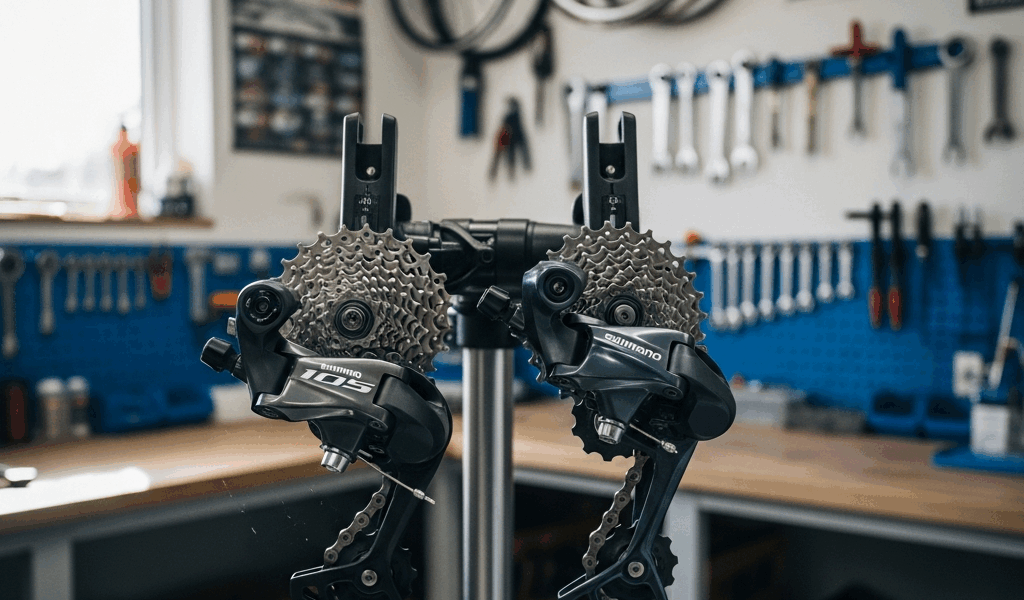
You are staring at two bikes on the shop floor — one with Shimano 105, the other with Ultegra — and the price gap is making you second-guess yourself. Is Ultegra genuinely better, or are you just paying for fancier lettering on the derailleur? I have put serious miles on both groupsets, and the honest answer surprised even me when I first dug into it.
What Actually Differs Between 105 and Ultegra
Strip the marketing away and you are left with a few measurable differences that matter — and several that do not.
Weight gets all the attention. A complete Ultegra R8100 groupset comes in roughly 200 to 250 grams lighter than the 105 R7100 equivalent. Sounds like a lot until you hold a full water bottle — that weighs more. On a 9kg road bike, we are talking a 2.5% weight reduction spread across cranks, derailleurs, cassette, chain, and brake calipers. Not nothing, but not transformative either.
The material difference is real though. Ultegra leans harder on carbon fiber — chainrings, brake lever blades — where 105 sticks with alloy. The cranks use a different carbon layup and the finish feels more polished. Functionally identical on the road. But pick up a bare crankset from each tier and you can tell immediately which one cost more.
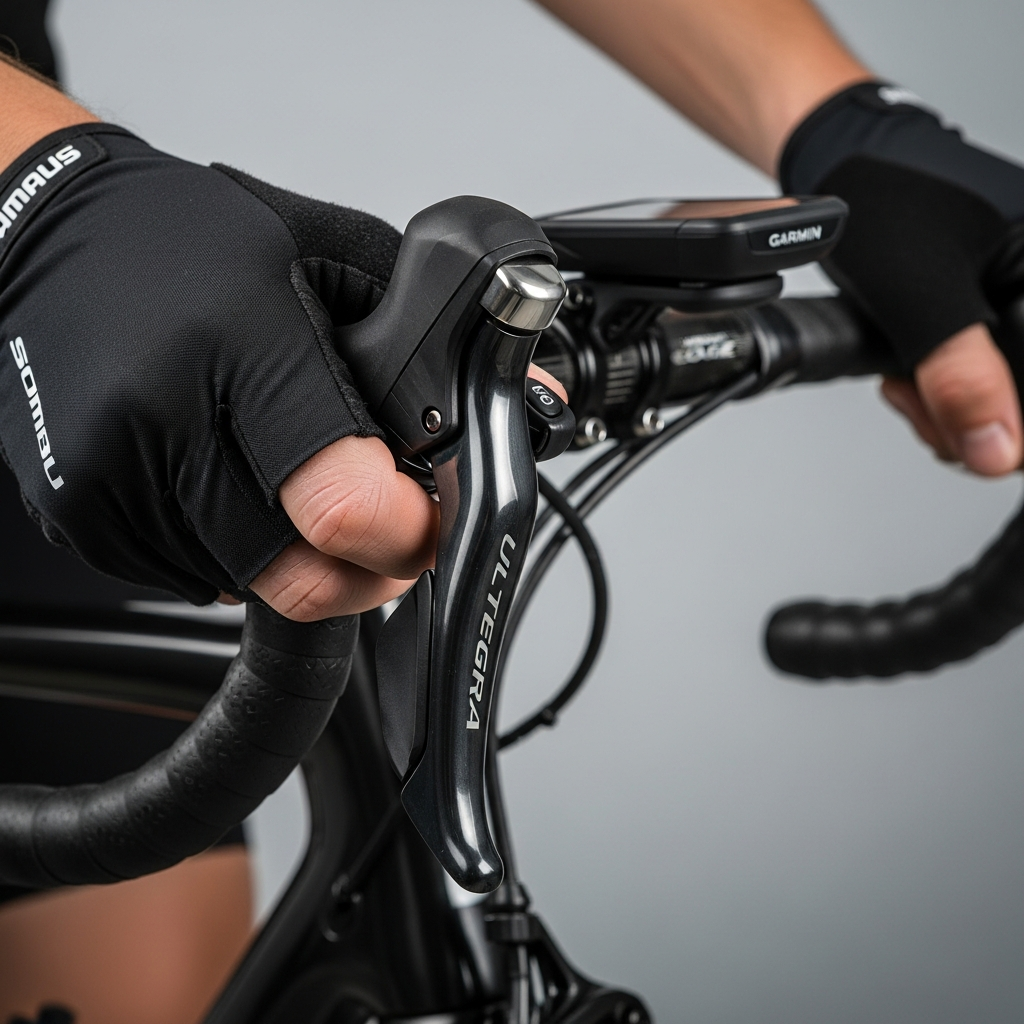
Shifting is where it gets interesting. On mechanical versions, Ultegra shifts with a crisper click and slightly smoother cable pull. Side by side on a workstand, you notice the difference. Out on the road during a Tuesday night group ride? Honestly, both shift well and neither will let you down mid-sprint. Now, the Di2 electronic versions — this is the part that surprised me. Both 105 Di2 and Ultegra Di2 perform almost identically. The motors do the work, and the motors are very close in execution speed and shift precision.
The price gap runs $200 to $500 at component level. On a complete bike, expect the Ultegra build to cost $500 to $800 more than the same frame dressed in 105. That is a meaningful chunk of money that could go elsewhere on the build.
When Ultegra Is Worth It
Let me be specific about the scenarios where Ultegra earns its premium, because vague “it depends” answers help nobody.
Racing is the obvious one. You pin a number on, you line up at crits, you need to respond instantly when someone attacks at 38 km/h. Crisper mechanical shifting helps there. The weight savings adds up over a four-hour stage on rolling roads. And racers beat on equipment — Ultegra’s tighter tolerances hold up well under that kind of sustained punishment.
Long mountain days are the other scenario that tips the math. Climbing 10,000 feet across an Alpine gran fondo, those 200-250 grams become real in your legs on the fifth ascent. Pair Ultegra with lighter wheels and the cumulative savings genuinely changes how you feel at hour six. I noticed this riding the Marmotte — by the final col, every ounce you are not pushing uphill matters.
Ultegra Di2 also offers more shift customization than its 105 counterpart — additional synchro-shift modes, finer multi-shift speed tuning, slightly faster execution. If you are the kind of rider who spends 20 minutes in the E-Tube app dialing in shift behavior, you already know this matters to you.
My rule of thumb: if you race consistently and the Ultegra premium is under 5% of the total bike cost, it is money well spent. You will feel it on every ride.
When 105 Is the Right Choice
This is the part most cycling media sidesteps because it is not exciting: for roughly 90% of road cyclists, 105 is genuinely all you need. The money you save is better spent on upgrades that make a bigger difference.
Saturday club rides, centuries, weekend exploring — 105 does all of it without complaint. You shift, it shifts. You grab the brakes on a fast descent, it stops. The weight difference disappears into the noise of your water bottles, saddle bag, phone, and the extra banana bread from the cafe stop. I have ridden multiple centuries on 105 and never once caught myself wishing for crisper shifts at mile 85. I was wishing for a tailwind. That is a different problem.
Think about what $200 to $400 buys instead. Better wheels — a wheelset upgrade from stock to something with quality hubs and lighter rims changes how your bike accelerates and holds speed more than any groupset swap. Better tires — switching from whatever stock rubber came on the bike to Continental GP5000s or Vittoria Corsa N.EXTs costs maybe $120 and transforms grip, rolling resistance, and confidence in corners. A professional bike fit runs $200-300 and affects your comfort and power output more than shaving 250 grams off components you cannot see while riding.
There is a practical advantage too. Every bike shop stocks 105 parts. Ultegra sometimes needs to be ordered. When your derailleur hanger snaps on a Tuesday evening before tomorrow’s group ride, the shop with a 105 replacement on the shelf saves your week. That has happened to me exactly once, and it was enough to appreciate the ubiquity of 105 spares.
Durability is a wash. Both groupsets wear at the same rate — chains stretch, cassettes wear, brake pads need replacing on the same timeline. I know riders with 30,000 miles on original 105 groupsets still shifting fine with regular maintenance.
The Verdict: A Decision Framework
After thousands of miles on both, here is how I think about the decision.
Buy 105 if you ride for fitness, fun, or social cycling. You are not pinning a number on. The price savings gets redirected to wheels, tires, or a bike fit — all of which change your ride experience more dramatically. Shimano 105 has been the best value in road cycling for over a decade, and the current generation is the best 105 yet.
Buy Ultegra if you race regularly and count grams. You are tackling mountainous events where cumulative weight matters across long climbs. The premium is a small fraction of your total bike investment. Or — and this is perfectly valid — you appreciate refined equipment and it brings you satisfaction every time you ride. Enjoyment matters.
Buy Dura-Ace if you compete at a level where marginal equipment gains translate to results. Or you love owning the best available and the cost does not compromise the rest of your build. For most of us, Dura-Ace is a luxury — a beautiful, well-engineered luxury, but a luxury.
The bottom line: 90% of cyclists will never outride Shimano 105. It is one of the best deals in the sport, and the money you save almost always does more good elsewhere on the bike. If reading that stings a little — you might be in the 10% who should go Ultegra. Trust that instinct.


Stay in the loop
Get the latest pro bike tech updates delivered to your inbox.