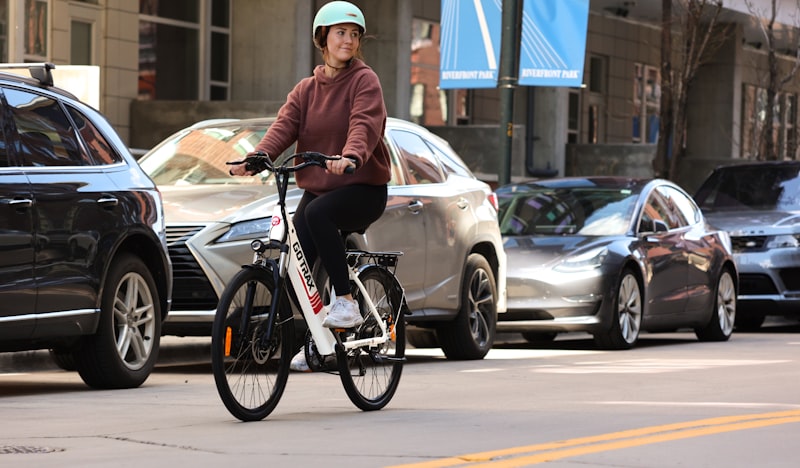
An electric-assist road bike is a drop-bar or road-oriented bicycle whose motor adds power while you pedal. Choose one by fit, assist class, motor feel, battery and service support—not by the largest advertised range. For a current aluminum endurance option, start with Trek’s Domane+ ALR; for lighter carbon endurance riding, compare the Domane+ SLR; for stronger Class 3 assistance, examine Cannondale’s Synapse Neo; and for mixed road/gravel capability, consider Specialized’s Turbo Creo 2 or Orbea’s Gain family.
These are category examples, not universal winners. We reviewed current manufacturer specifications and public safety guidance. We did not conduct a controlled ride test, and specifications, regional availability and prices can change.
Electric road bikes at a glance
| Bike/family | Best fit | Current system highlight | Main tradeoff |
|---|---|---|---|
| Trek Domane+ ALR | Aluminum endurance value | TQ system, 360Wh battery, up to 28-mph assist on current U.S. page | Heavier than premium carbon builds |
| Trek Domane+ SLR | Quiet, light carbon endurance bike | TQ HPR50 integration, 360Wh battery | High price and integrated parts |
| Cannondale Synapse Neo | Powerful long-road assistance | Bosch Performance Line Sprint, 400Wh battery, up to 28-mph assist | More motor and battery weight |
| Specialized Turbo Creo 2 | Road plus rough-road flexibility | Specialized SL 1.2 motor, 320Wh battery, large tire clearance | Closer to all-road/gravel than a pure race bike |
| Orbea Gain | Subtle road-bike appearance and lighter assist | Integrated carbon platform with region-specific builds | Exact motor, speed and build must be checked by market |
What makes an e-road bike different?
An e-road bike preserves road-bike geometry, efficient tires and drop-bar hand positions while adding a motor, battery, controller, sensors and charger. The extra system changes weight, rear-hub or crank interfaces, wheel removal, service needs and travel planning.
Most performance-oriented models use pedal assist rather than a throttle. Assistance should feel proportional to rider effort and cadence, then stop at the applicable speed limit. Above that cutoff—or with an empty battery—you still pedal the full bike and drivetrain.
1. Fit comes before the motor
Do not choose size from rider height alone or assume a nominal “54” matches another brand. Compare stack, reach, standover, crank length, handlebar width and adjustment range. An endurance geometry is usually the safest starting point for long rides because it places less demand on flexibility than a low race position.
The motor does not fix discomfort. A bike that helps on hills can still cause hand, neck, knee or saddle pain when the fit is wrong. Test the bike with the motor off, at the assist cutoff and through the steering range.
2. Choose the applicable assist class
U.S. states and land managers do not all apply identical e-bike rules. A common framework distinguishes pedal-assist bikes that stop assisting at 20 mph, throttle-capable bikes with a 20-mph limit, and pedal-assist Class 3 bikes that stop assisting at 28 mph. Local definitions, age rules, helmet requirements and access can differ, and New Jersey changed its framework in 2026.
Check the law where you ride and every trail or event policy. A U.S. 28-mph model may be sold with different assistance limits in another region. Racing, group rides and organized fondos may prohibit motors even where street use is legal.
3. Mid-drive versus rear-hub assist
Mid-drive
A mid-drive motor applies power through the crank area. It can deliver natural torque-responsive assistance and use the bicycle’s gearing, but it adds load to the drivetrain and can complicate crank, chainring or bottom-bracket service. Current Domane+, Synapse Neo and Turbo Creo platforms use compact mid-drive systems.
Rear-hub
A rear-hub system can be visually discreet and mechanically separate from the crank, but wheel removal, spoke service and wheel replacement need system-specific planning. Motor feel depends on sensors and control tuning, not merely location.
Regenerative braking is not a normal range-extending feature on the road bikes listed here. Many bicycle drive systems use freewheels and small batteries where regeneration adds complexity for limited gain. Do not buy based on a generic claim that most e-bikes recover braking energy.
4. Read battery capacity and range correctly
Battery energy is usually listed in watt-hours (Wh). A larger number can support more work, but it also adds mass and does not translate into a fixed mileage. Range changes with assist level, rider and cargo weight, climbing, speed, wind, temperature, tire pressure, surface, stops and battery age.
Trek currently lists a 360Wh battery and “around 60 miles” for its Domane+ ALR/SLR under stated product assumptions. Cannondale lists 400Wh for the Synapse Neo and an optional 250Wh secondary battery. Specialized lists 320Wh on the referenced Turbo Creo 2 build and advertises up to 120 miles with conditions and range-extension assumptions. Those numbers are not interchangeable tests.
Plan from your worst realistic route: distance, climbing, headwind and temperature. Leave a reserve, learn how the bike rides without assist, and test the route before relying on it for a deadline.
5. Current electric road-bike examples
Trek Domane+ ALR and SLR
Trek’s current Domane+ range splits into aluminum ALR and carbon SLR families. Its U.S. comparison page lists a 360Wh battery, up-to-28-mph assistance and roughly 60-mile range for both, while the SLR uses higher-level carbon and rear IsoSpeed. The ALR is the rational starting point when fit and assist matter more than minimum weight.
Verify the exact build, motor version, torque, tires and regional speed class on Trek’s current Domane+ comparison.
Cannondale Synapse Neo
The current U.S. Synapse Neo pairs a carbon endurance frame with Bosch’s Performance Line Sprint, a 400Wh battery and assistance up to 28 mph. Cannondale lists 55Nm torque, 600 watts of assist, 30mm stock tires and clearance up to 45mm on the current build.
This is the stronger-assistance choice in the group, but confirm whether that power, weight and price suit the ride. See the exact specification on Cannondale’s Synapse Neo page.
Specialized Turbo Creo 2
Creo 2 moves toward all-road riding with wide tire clearance, Future Shock and rack/fender provisions on current frames. The referenced S-Works build uses Specialized’s SL 1.2 motor and a 320Wh integrated battery. That versatility helps on broken pavement and gravel connectors but may be unnecessary for smooth-road riders.
Use Specialized’s current product specification as an example and compare less expensive Creo 2 builds rather than assuming the flagship is required.
Orbea Gain
Orbea’s Gain family targets a discreet road-bike profile. Regional model names and assistance limits vary, so confirm the exact motor, battery, charger, speed class, tire clearance and dealer support in the country of purchase. The current Gain M30 specification sheet is one U.S. configuration, not a universal Gain specification.
6. Brakes, tires and gearing
Hydraulic disc brakes are common because e-road bikes are heavier and can sustain higher average speeds. Inspect rotor size, pad availability and heat management for long descents. More power does not shorten stopping distance.
Choose tires for the real surface and load. Wider tires at appropriate pressure can improve comfort and control. Check actual clearance, rim compatibility and manufacturer limits. For hills, compare the easiest mechanical gear; the bike must remain manageable when assistance is reduced or absent.
7. Battery and charging safety
The U.S. Consumer Product Safety Commission urges consumers to use products designed and certified to applicable consensus safety standards, use only the supplied charger, remain present while charging, avoid charging while sleeping, use approved replacement batteries and never use packs modified by unqualified personnel.
Look for credible third-party certification of the complete electrical system, such as UL 2849 where applicable. Confirm the exact model—not just the brand. Do not charge a damaged, wet, swollen or recalled battery. Follow manufacturer temperature and storage instructions, and use the local hazardous-waste or battery-recycling process rather than household trash.
8. Service and ownership checklist
- Confirm a local shop supports the frame and motor system.
- Ask about battery, charger, display and motor replacement availability.
- Check warranty transfer rules before buying used.
- Scan CPSC and manufacturer recall notices for the exact model.
- Price proprietary keys, range extenders and travel covers.
- Learn wheel removal and roadside flat repair.
- Ask how firmware updates and diagnostics work.
- Confirm airline, train and vehicle-rack restrictions before travel.
Frequently asked questions
Can an electric road bike be ridden without the motor?
Yes, but the motor and battery add weight and some systems create more drag than others. Test the exact bike above the cutoff and with assistance off.
How far can an electric road bike go?
There is no universal mileage. Battery energy, assist level, climbing, speed, weather, rider mass, tires and battery condition determine real range.
Are electric road bikes allowed in group rides?
Ask the organizer. Road legality does not guarantee event, club or race eligibility. Ride predictably and disclose assistance where group policy requires it.
Do e-road bikes charge while descending?
Most current performance e-road systems do not provide regenerative braking. Follow the exact drive-system documentation.
Is a Class 3 road e-bike always legal on bike paths?
No. Access varies by state, locality and land manager. Verify the route before riding.
Bottom line
Start with fit and the legal assist class. Choose Domane+ ALR for an aluminum endurance platform, Domane+ SLR for a lighter carbon approach, Synapse Neo for stronger Class 3 assistance, and Creo 2 or Gain when all-road flexibility or subtle integration matters. Verify the exact regional build, test it without assistance, and buy from a service path you trust.

Stay in the loop
Get the latest pro bike tech updates delivered to your inbox.