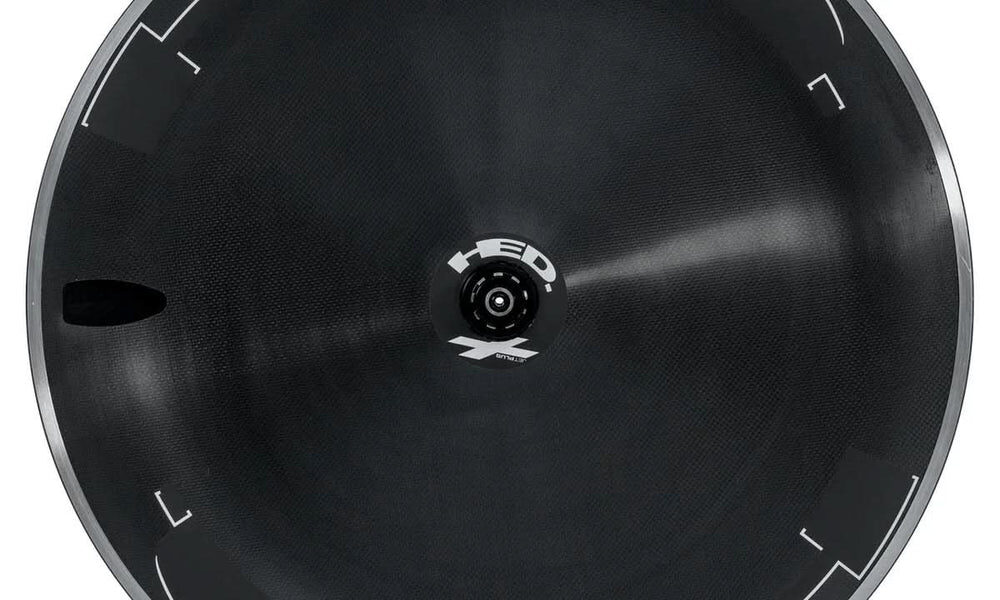
The disc wheel remains the most aerodynamically efficient wheel option for cycling, eliminating spoke turbulence and presenting a perfectly smooth surface to the wind. Professional time trialists rely on rear disc wheels as the foundation of their aerodynamic setup, but disc wheel selection involves far more complexity than simply choosing the most expensive option available.
The Science Behind Disc Wheel Aerodynamics
Disc wheels derive their aerodynamic advantage from eliminating the turbulent wake created by rotating spokes. In a spoked wheel, each spoke cycles through different apparent wind angles as the wheel rotates, creating a constantly changing aerodynamic profile that generates significant drag.
The smooth, continuous surface of a disc wheel allows air to flow cleanly around the wheel’s profile. At racing speeds, this difference translates to significant wattage savings—often 20-40 watts compared to a deep-section spoked wheel at 45 km/h.
Surface Texture and Boundary Layer Control
Modern disc wheel design goes beyond simply creating a flat surface. Engineers study boundary layer behavior—how air molecules interact with the wheel surface at the microscopic level. Some disc wheels incorporate subtle texture patterns or surface treatments designed to energize the boundary layer and delay flow separation, similar to golf ball dimples.
Disc Wheel Construction Types
Three primary construction methods dominate the disc wheel market, each with distinct characteristics:
Full Carbon Disc Wheels
Premium disc wheels use continuous carbon fiber construction with integrated hub shells. These wheels offer the best stiffness-to-weight ratio and allow designers complete control over aerodynamic shaping. The highest-end options feature precisely controlled surface profiles that optimize performance across different wind angles.
Carbon Covers over Spoke Wheels
Some disc wheels use carbon fiber covers attached to a conventional spoked wheel structure. This approach reduces cost and allows the same hub and spoke infrastructure to create both deep-section and disc configurations. However, the additional material adds weight, and the cover-to-rim interface creates potential turbulence sources.
Foam-Core Construction
Structural foam sandwiched between carbon layers provides an economical way to create disc wheel shapes. These wheels are heavier than pure carbon designs but significantly more affordable. For amateur time trialists, foam-core discs often provide the best value proposition.
Crosswind Handling Characteristics
The disc wheel’s primary disadvantage is crosswind sensitivity. The same large surface area that creates aerodynamic efficiency also catches sidewind, creating steering forces that affect bike handling. Understanding and managing crosswind effects is essential for safe and effective disc wheel use.
Wind Speed Thresholds
Most experienced time trialists establish personal wind speed limits for disc wheel use:
- Under 15 km/h winds: Disc wheels work well for most riders
- 15-25 km/h winds: Experienced riders can manage, beginners should consider alternatives
- Over 25 km/h winds: Most riders switch to deep-section spoked wheels
These thresholds vary based on rider weight, bike handling skill, and course characteristics. Heavier riders experience proportionally less effect from the same wind force.
Course Considerations
Course terrain significantly affects disc wheel viability. Open, exposed courses with consistent crosswinds favor predictable handling—once you adapt to the wind, it remains constant. Urban courses with buildings, trees, and bridges create turbulent, gusty conditions that can catch riders by surprise.
Disc Wheel Selection Criteria
Professional teams evaluate disc wheels across multiple performance dimensions:
Aerodynamic Performance
Wind tunnel testing at various yaw angles reveals how wheels perform across the range of apparent wind directions encountered during racing. The best disc wheels maintain efficiency from 0 to 15 degrees of yaw, covering most real-world conditions.
Weight Considerations
While disc wheels are inherently heavier than spoked alternatives, weight differences between disc wheel models can be substantial—from under 1000g to over 1500g for the rear wheel alone. For flat time trials, additional weight matters less than aerodynamics, but hilly courses require balancing these factors.
Hub and Drivetrain Compatibility
Disc wheels must integrate with modern drivetrain systems. Hub compatibility with 11-speed, 12-speed, and various freehub body standards affects wheel selection. Centerlock versus six-bolt rotor interfaces matter for disc-brake equipped bikes.
Professional Time Trial Setup
WorldTour time trialists typically use a rear disc wheel paired with a deep-section front wheel (80-90mm depth). The front wheel choice balances aerodynamics against handling—a front disc wheel creates extreme crosswind sensitivity that only the most experienced riders can manage.
Surface and Tire Considerations
Disc wheels interact with tire choice to affect overall system aerodynamics. Tire width must match the disc wheel rim width for optimal airflow. Most modern disc wheels are optimized for 25mm or 28mm tires, with the tire serving as the leading edge of the wheel-tire system’s aerodynamic profile.
Maintenance and Durability
Disc wheels require specific maintenance attention. The enclosed design prevents visual inspection of internal hub components, making scheduled service intervals more important. Carbon surfaces can be damaged by improper brake pad contact on rim-brake versions, and surface damage can degrade both aerodynamics and structural integrity.
Proper storage in temperature-controlled environments protects carbon materials from degradation. Many teams maintain dedicated disc wheel cases with humidity control for transporting valuable equipment.
Investment Considerations
High-quality disc wheels represent a significant investment, with top-tier options costing several thousand dollars. For serious time trialists, the wattage savings justify this expense. However, recreational riders should carefully evaluate whether the investment aligns with their performance goals and racing frequency. A quality mid-range disc wheel often provides most of the aerodynamic benefit at a fraction of the cost of flagship models.

Stay in the loop
Get the latest pro bike tech updates delivered to your inbox.