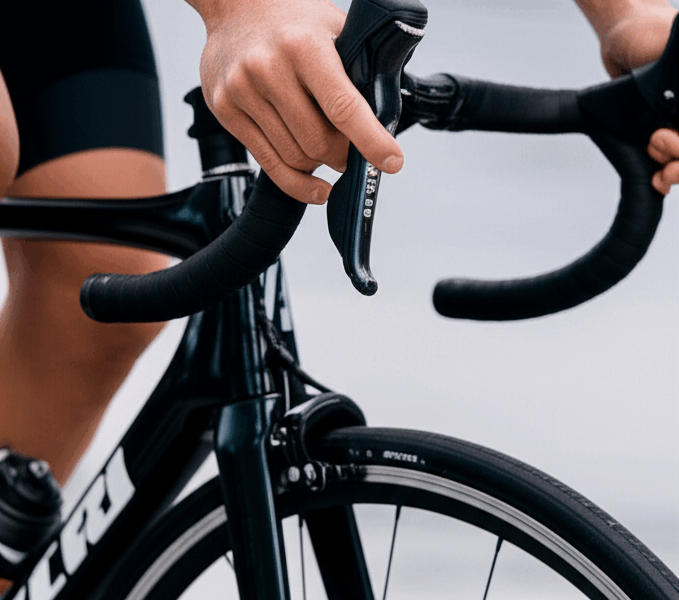
Choose your first road bike by working backward from your rides—not from a race photo or component hierarchy. Decide where you will ride, how long, whether you need commuting or luggage mounts, and what local climbs demand. Then test sizes and compare complete ownership cost.
This guide explains the selection process. For current model examples, see our separate best beginner road bikes comparison.
Step 1: define the riding you will actually do
- Paved fitness rides and group rides: a conventional endurance road bike is the default.
- Commuting: prioritize fender and rack mounts, durable tires, lights, and service access.
- Broken pavement and rail trails: look for wider tire clearance and stable all-road geometry.
- Racing: obtain a performance-oriented fit before choosing aggressive geometry.
- Touring or heavy luggage: verify mounting points, total weight limits, wheel strength, and low gearing.
A road bike can be versatile, but it cannot be optimized for every use. Do not buy a narrow-tire race bike for regular gravel or a heavy touring platform solely for short fast rides.
Step 2: establish a complete budget
Include assembly, fit, taxes, pedals, helmet, lights, pump, repair supplies, bottles, and an early service. Used bikes may also need a chain, cassette, tires, cables, brake pads, bearings, or wheel work. A lower sticker price is not always a lower first-year cost.
Step 3: shortlist sizes before components
Use the manufacturer chart to identify likely sizes, then compare stack, reach, standover, crank length, and handlebar width. Height alone cannot guarantee fit. Our road-bike fit guide covers the measurements and adjustment limits.
Do not assume that changing the stem can rescue any wrong frame size. Large corrections can affect handling, weight distribution, and available adjustment.
Step 4: compare the lowest gear
New riders often focus on the number of speeds. The lowest ratio is usually more important on hills. Compare the smallest front chainring with the largest rear sprocket, while accounting for wheel and tire size. Our guide to road-bike gearing and usable ratios explains the tradeoffs.
Step 5: choose a practical tire range
Many first-time riders benefit from 28–35 mm road tires because they can provide useful grip and comfort without turning the bike into a mountain bike. Confirm the manufacturer’s measured clearance, rim compatibility, and pressure limits. Printed tire width can differ from actual mounted width.
Step 6: understand the brake system
Hydraulic discs generally offer lighter lever effort and automatic compensation for pad wear. Mechanical discs are simpler in some respects but depend heavily on setup and cable condition. Rim brakes can remain a valid choice on a suitable used bike. Test whether you can reach and control the levers from your normal hand positions.
Step 7: value serviceability
Ask whether a local shop stocks compatible brake pads, chains, cassettes, derailleur hangers, tires, and bearings. Confirm who handles warranty work and whether the first adjustment is included. Proprietary integration may look clean while increasing repair cost.
New, direct-sale, or used?
| Route | Main advantage | Main risk |
|---|---|---|
| Local bike shop | Fit, assembly, test ride, and service relationship | Smaller selection or higher initial price |
| Direct sale | Strong specification for the money | Sizing, assembly, returns, and local service are your responsibility |
| Used | Potentially excellent value | Wrong fit, hidden damage, wear, obsolete standards, or stolen property |
Have a qualified mechanic inspect a used bike before purchase, especially a carbon frame or fork. Verify the serial number and ownership, and budget for immediate wear items.
First test-ride checklist
- Verify the exact model, year, build, and frame size.
- Check stand-over clearance and starting/stopping control.
- Use every gear and both brakes.
- Evaluate hand, neck, back, knee, and saddle comfort over more than a parking-lot lap.
- Try the lowest gear on an appropriate incline.
- Confirm tire clearance, mounts, and accessory compatibility.
- Ask what adjustments, returns, and warranty support are included.
Common first-bike mistakes
- Buying the wrong size because it is discounted.
- Choosing race geometry for non-racing use.
- Ignoring the lowest gear on hilly routes.
- Spending the entire budget before safety equipment and setup.
- Assuming a higher component tier automatically produces comfort.
- Buying a used carbon bike without competent inspection.
- Relying on a review for a different model year or component build.
Frequently asked questions
Should your first road bike have drop handlebars?
If you want traditional road riding, multiple hand positions, and efficient longer-distance travel, drop bars are appropriate. A flat-bar fitness bike may be easier for upright urban riding.
Should a first road bike have pedals included?
Some road bikes do not include pedals. Beginners can start with quality flat pedals before deciding whether clipless shoes and pedals suit their riding.
Can you buy a road bike without a test ride?
Yes, but sizing risk increases. Use detailed geometry, a comparable test ride, return rules, and ideally a professional fit before committing to a direct-sale bike.
Bottom line
Define the ride, establish the complete budget, confirm size, and compare low gearing, tire clearance, brakes, and service. Only then choose a model. That process produces a better first bike than buying whichever frame has the most impressive component label.



Stay in the loop
Get the latest pro bike tech updates delivered to your inbox.